
Graphic design is always changing. New technology, changing customer tastes and fresh creative ideas all influence how brands communicate. In 2026, design is moving towards work that feels more human, expressive and memorable.
Perfect layouts and highly polished graphics still have their place, but businesses are also embracing texture, bold type, handmade details and designs with more personality. AI is becoming part of the creative process too, helping designers explore ideas faster while still relying on human judgement to create the final result.
Major 2026 design forecasts from Canva and Adobe both point towards authenticity, sensory design, creative experimentation and the growing use of AI.
For businesses, these trends offer new ways to refresh branding and make printed marketing materials stand out. From business cards and brochures to packaging, stickers and signage, good design can help your brand get noticed and remembered.
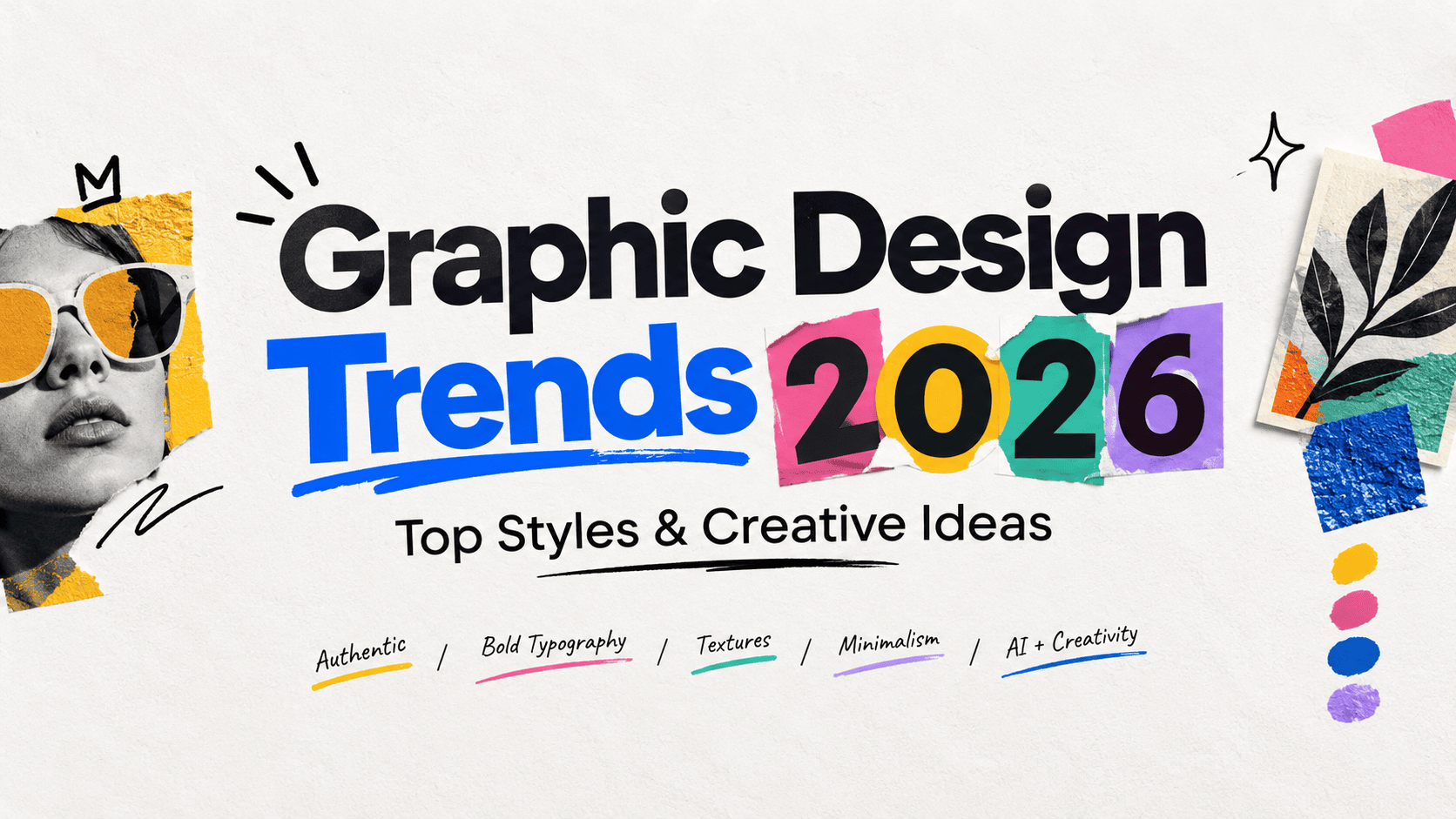
Why Graphic Design Trends Matter for Businesses in 2026
Following graphic design trends does not mean changing your brand every year. It means understanding what customers are seeing and how visual expectations are changing.
A design that looked fresh several years ago may now feel dated. Updating colours, typefaces, layouts or photography can give an established brand a more current look without changing its identity.
Trends can also help businesses find new ways to compete for attention. People see a large amount of advertising every day. If your brochure, sign, poster or business card looks the same as everything else, it may be easy to overlook.
The best approach is to use trends carefully. Choose the ideas that suit your brand instead of following every new style.
Top Graphic Design Trends to Watch in 2026
Design in 2026 is less focused on making everything look perfect. Instead, designers are exploring personality, texture and creative freedom.
Canva describes 2026 as the year of “Imperfect by Design”, with growing interest in raw visuals, tactile textures and less polished styles. Adobe’s 2026 forecast also highlights sensory design, authentic connections and more experimental creative work.
These ideas can work across both digital and printed designs.
Human, Imperfect and Authentic Design
One of the strongest graphic design trends in 2026 is a move towards work that feels more human.
For years, many brands aimed for clean, perfect and highly polished graphics. The problem is that too much perfection can sometimes make a design feel cold or generic.
Hand-drawn illustrations, rough edges, uneven shapes, handwritten type and natural photography can make a design feel more personal.
Canva’s 2026 research highlights growing interest in raw, honest and imperfect visuals as creators move away from designing everything for a perfectly polished online appearance.
Businesses can use this trend without making their marketing look messy. Even a small handmade element or less formal photograph can give a brand more warmth.
Bold and Expressive Typography
Typography is becoming more than a way to display information. In many designs, the words themselves are becoming the main visual feature.
Large headlines, unusual letter shapes and strong font combinations can quickly attract attention.
This approach works well for posters, flyers, packaging and signage because customers often only have a few seconds to notice the message.
A bold headline can create impact before someone reads the smaller details.
Readability should still come first. Creative fonts work best for short headlines, while simpler typefaces usually make longer text easier to read.
Tactile Textures and Layered Design
Texture is becoming more important as designers try to make visual work feel less flat.
Paper textures, grain, fabric effects, shadows, transparent layers and raised-looking surfaces can add depth to a design.
Canva has identified tactile design as one of its major 2026 trends, while Adobe also highlights visuals that appeal to more than just sight.
Printed materials give businesses even more opportunities to explore texture because the customer can actually touch the finished product.
The choice of paper, coating and finish can turn a simple design into something that feels premium.
Clean and Structured Minimalism
Bold design is growing, but minimalism is not disappearing.
Instead, minimalism in 2026 is becoming more thoughtful. Designers are using strong grids, open space, clear type and carefully chosen colours to remove unnecessary clutter.
This style is useful when a business wants to appear professional, modern and confident.
It can work particularly well for corporate stationery, professional services, premium brands and businesses that need to communicate information clearly.
The goal is not to leave a design empty. It is to make every element earn its place.
Retro and Nostalgic Design
Old styles often return with a modern twist, and 2026 is no exception.
Retro colours, vintage illustrations, classic typefaces and design ideas inspired by older advertisements can give a brand a familiar and memorable feel.
Nostalgia can be powerful because it can remind people of a certain time, place or feeling.
However, businesses should avoid copying an old design exactly. A stronger approach is to take one or two retro ideas and combine them with a modern layout.
This keeps the design fresh while still giving it character.
Bold Colours and High-Impact Visuals
Strong colours can help a brand stand out in a busy market.
Bright contrasts, rich colour combinations and oversized images are being used to create designs that demand attention.
Adobe’s 2026 trend forecast points towards large, sensory visuals that create a stronger emotional response.
For printed marketing, bold colour can work especially well on posters, event materials, packaging and signage.
The key is consistency. Colours should still work with your brand and should not make important text difficult to read.
Collage, Scrapbook and Handmade Styles
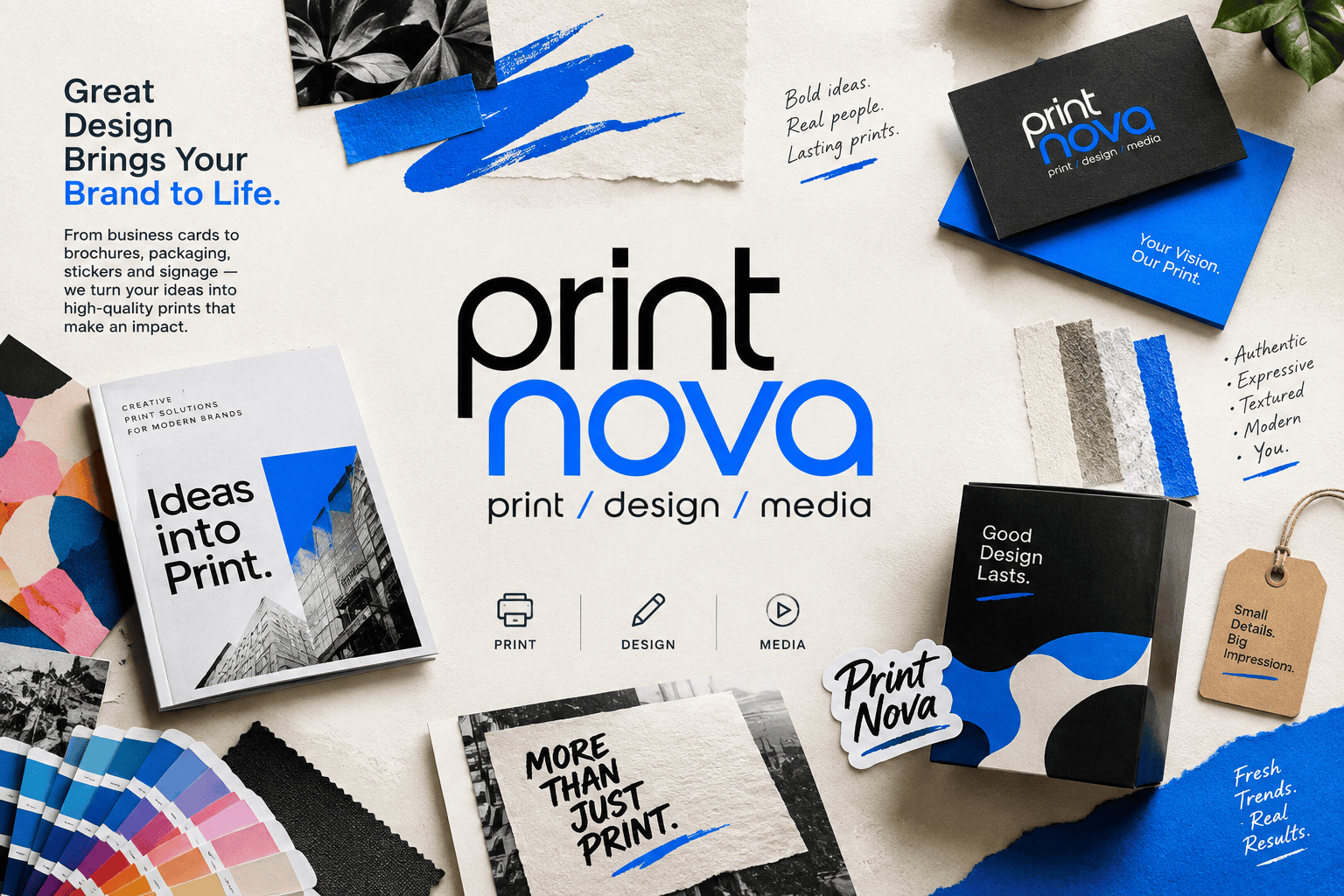
Collage-style design brings together photography, paper textures, handwritten notes, shapes and illustrations.
The finished result can look like a scrapbook or handmade artwork.
This style fits well with the wider move towards authentic and less polished design. Canva has also reported growing interest in DIY, scrapbook and analogue-inspired visuals.
A collage approach can work well for creative businesses, events, hospitality brands and campaigns aimed at younger audiences.
It can also give social media graphics and printed flyers a more personal feel.
AI-Assisted Graphic Design
Artificial intelligence is now part of many creative tools.
Designers can use AI to explore concepts, generate images, test colour ideas, remove backgrounds and create early versions of layouts.
AI can make some parts of the design process faster, but it does not replace good creative thinking.
A designer still needs to decide whether the image suits the business, whether the message is clear and whether the final artwork will work correctly when printed.
Canva and Adobe both place AI alongside human creativity in their 2026 design forecasts rather than treating it as a replacement for creative judgement.
The strongest approach is to use AI as a creative tool while keeping people in control of the final design.
How to Use 2026 Graphic Design Trends in Your Branding
You do not need to completely redesign your business every time a new trend appears.
Start with your existing brand. Think about your logo, colours, fonts and the type of customers you want to attract.
Then choose a trend that fits naturally.
A professional business might use stronger typography or cleaner layouts. A creative brand could try textured graphics, collage elements or bold colour combinations. A premium business may prefer minimal layouts combined with high-quality paper and specialist print finishes.
The trend should support your brand rather than hide it.
Graphic Design Trends for Business Cards and Stationery
Business cards may be small, but they still give customers an impression of your business.
In 2026, simple layouts can be combined with bold type, unusual finishes and textured materials to create more memorable cards.
A clean card with a strong logo may only need one special detail, such as foil, embossing or a raised finish, to make it stand out.
Business stationery should follow the same visual style. Letterheads, presentation folders and other materials should feel connected so customers recognise the brand wherever they see it.
Printnova offers business card design and printing with options including different textures and specialist finishes such as foiling, Spot UV, Scodix and embossing.
Graphic Design Trends for Flyers, Brochures and Posters
Flyers, brochures and posters need to communicate information quickly.
Strong headlines, clear spacing and high-impact images can help readers understand the message without working too hard.
For brochures, layered layouts and different text sizes can guide people through the information in the right order.
Posters can be bolder because they often need to attract attention from a distance. Large typography, strong colour contrasts and a simple message can work better than trying to fit too much onto the page.
Even when following a trend, the main message should always be easy to find.
Graphic Design Trends for Packaging and Stickers
Packaging can turn a normal product into part of the brand experience.
Bold colours, simple labels, tactile finishes and handmade-style graphics can help products look different from competitors.
Stickers offer businesses another way to experiment with design. They can be used on packaging, promotional products, envelopes and event materials.
Because stickers are smaller and easier to change than a full brand identity, they can also be a good place to test a new visual idea.
The design should still remain clear and easy to recognise, especially when customers see the product from a distance.
Graphic Design Trends for Signage and Large Format Printing
Large format printing needs a different design approach.
A design that works on a business card may not work on a large sign.
Signage usually needs fewer words, bigger type and stronger visual contrast. The main message should be easy to understand quickly.
Bold typography and high-impact colours fit well with large format printing because they can help signs attract attention from further away.
Printnova provides large format printing alongside digital and offset printing services for business marketing materials.
How Print Finishes Can Bring Design Trends to Life
Digital graphics can create the appearance of texture, but print allows people to actually feel it.
This makes specialist finishing especially useful for the tactile design trend.
The right finish can highlight a logo, headline, pattern or important part of a design. Printnova offers options including Spot UV, Scodix, foiling, embossing and custom die cutting.
The finish should support the design rather than cover the entire page.
Foiling
Foiling adds a metallic or reflective feature to selected areas of a printed design.
It is often used on logos, names, borders and important details.
Foil can give business cards, invitations, packaging and presentation materials a premium look. It works especially well when the rest of the design is kept simple, allowing the foil to become the feature.
Embossing
Embossing raises part of the paper to create a physical texture.
A logo, symbol or piece of text can be pressed into the material so it stands above the surrounding surface.
The effect can be subtle, but that is often what makes it feel premium.
Embossing works particularly well with minimalist design because it adds interest without requiring more colour or graphics.
Spot UV and Scodix
Spot UV uses a glossy coating on selected areas of a printed product. This creates contrast between glossy and non-glossy sections.
It can be used to highlight a logo, image, pattern or important text.
Scodix can create a raised effect that adds another level of texture. Printnova describes Scodix as a digital enhancement that can produce a raised ink look and feel.
Both options can help turn a simple printed design into something more noticeable and tactile.
Choosing a Graphic Design Trend That Suits Your Brand
A trend should never be used just because it is popular.
Think about how customers already see your business.
A law firm, construction company and local cafe may all use current design trends, but they should not look the same.
Ask whether the trend supports the personality of your brand. Does it make your message clearer? Will your customers understand it? Will the design still work after the trend is no longer new?
A good designer can take inspiration from a trend without allowing it to take over the whole brand.
Digital Design Trends vs Print Design Trends
Digital and print designs often share the same visual trends, but they work in different ways.
Digital designs can use movement, animation and interactive features. They can also be changed quickly.
Printed materials are physical. Customers can hold them, feel the paper and notice finishes that cannot be fully experienced on a screen.
This means print gives businesses another way to make a design memorable.
Colour also needs careful planning. Artwork created for a screen may not look exactly the same when printed. Print-ready artwork should be prepared using the correct colour settings, resolution, bleed and file setup.
Printnova recommends print-ready files using CMYK colour, appropriate bleed and high-resolution images to help achieve professional printing results.
Common Mistakes When Following Graphic Design Trends
One of the biggest mistakes is trying to use too many trends at once.
A design with bold colours, several unusual fonts, textures, collage graphics and multiple special finishes can quickly become confusing.
Another mistake is choosing a trend that does not suit the business. A visual style may look impressive online but still be wrong for your customers.
Readability should also never be sacrificed for style. If people cannot read the headline, phone number or call to action, the design is not doing its job.
Businesses should also think about how a design will be printed before the artwork is finished. Paper stock, colours, size and specialist finishes can all affect the final result.
How Printnova Can Bring Your Design Ideas to Life
A strong design needs to look good both on screen and in its final printed form.
Printnova combines graphic design knowledge with professional printing experience. Its in-house design team can help create print-ready artwork for items including business cards, posters, stickers, flyers, brochures and signage. The team can also provide advice on colour, paper stock and specialist finishes.
Having design and printing handled together can also make it easier to choose an idea that works in the real world.
Whether you want a clean modern look, bold typography, textured materials or a premium finish, the goal should always be the same: create something that represents your business clearly and professionally.
Conclusion
Graphic design trends in 2026 are giving businesses more freedom to be creative.
Human and imperfect visuals are becoming more common, while bold typography, tactile textures, nostalgic styles and strong colours are helping brands show more personality. AI is also giving designers new ways to explore ideas while human creativity remains an important part of the process.
Not every trend will suit every business. The best design is one that feels current while still looking and sounding like your brand.
Print also gives these trends another dimension. Quality paper, professional colour, foiling, embossing, Spot UV and Scodix can turn a visual idea into something customers can see and feel.
Ready to refresh your brand or create printed materials that make an impact? Contact Printnova today to discuss your graphic design and printing needs. From the first idea to the finished print, our team can help bring your next project to life.





